








| Settle Carlisle Railway - developments, events and incidents: ongoing discussion Posted by Chris from Nailsea at 14:10, 15th December 2013 |     |
From the BBC, an article by Spencer Stokes, BBC Look North:
Settle-Carlisle line thriving 30 years on after closure threat

The dramatic Ribblehead viaduct is one of 20 such structures built by Victorian engineers along the Settle-Carlisle line
It was exactly 30 years ago that British Rail first announced plans to close the famous Settle to Carlisle railway, one of the last great main lines of the Victorian era. But campaigners fought hard to save it and now it is a thriving route, clocking up 1.2 million journeys a year.
Rumours about British Rail's secret plan to shut the Settle-Carlisle line had been circulating for years. Then in December 1983 there it was in cold, hard print. Official closure notices displayed at stations on the line informing passengers that from May 1984 trains would be withdrawn.
Seventy-two miles of what was one of the last great Victorian infrastructure projects faced the imminent prospect of being wiped off Britain's railway map. The track would be lifted, stations boarded up and viaducts and tunnels left to decay.
In the 1960s about 5,000 miles of railway line had met a similar fate following the publication of the now-infamous Beeching Report. Protesters had tried to prevent the axe falling on routes across the country, but with little success. For five-and-a-half years it seemed the Settle-Carlisle line was heading in the same direction; the line would become no more than another lost link through spectacular scenery.

The closure notices which appeared in December 1983 had to be withdrawn because of a legal error
But fortune smiled on the Settle-Carlisle, because that blunt and drily-worded closure poster contained a legal error meaning the posters had to be taken down, reprinted and reissued. That delay gave the newly-formed Friends of the Settle-Carlisle Line vital time to get organised and encourage objectors to write letters.
John Moorhouse, who was the chairman of the North West Transport Users Consultative Committee, played a key role in fighting the closure and says the unexpected level of opposition to the plan gave some hope. "You had to be optimistic, the objections kept mounting up and I think that closure notice being reissued was a big help in the campaign to keep the line open," he said. "Also shutting the line was opposed by the local authorities, they came together and made a very good case to keep it open."
All the extra publicity that the Settle-Carlisle was receiving meant that passenger numbers started to rise. Visitors to the Yorkshire Dales and Cumbria's Eden Valley started leaving their cars at home and catching the train instead, believing it might be the last chance they would get to travel over Ribblehead Viaduct or through England's highest mainline station at Dent.
That rise in passenger numbers meant British Rail had to increase the number of services it operated over the route and, for the first time since the 1960s, the spiral of decline had been halted.
However, British Rail had other reasons for advocating closure and the dilapidated state of the viaduct at Ribblehead was one. Built in 1870 the 100ft (30m) high structure was in desperate need of repair. Official estimates put the price at ^7m, but the campaigners found engineers who could prove that the work could be carried out at a fraction of the cost.
The arguments against closure were diminishing, but the railway was still sucking up public money and it was presumed the pro-road Conservative government would eventually give closure the green flag.
The final decision would rest with the then Minister of State for Transport and Thatcher loyalist Michael Portillo. Almost without warning in May 1989, Portillo told British Rail he was refusing permission to close the railway. Looking back he has admitted it was a difficult decision.
"There was awkwardness because Conservatives want to do two things, they want public services to run efficiently, so we wanted to reduce public subsidy to the railway line, but we also had a respect for the national heritage and we knew it was a very remarkable and historic line," he said. "Fortunately we managed to bring the two things together, because the economic case for closure was very much weakened when vast numbers of people began to travel on the line. There was a sort of closing down sale and also some very clever engineers discovered they could do the job of restoring the Victorian structures much more cheaply than we thought."
The Settle-Carlisle line had been thrown a lifeline by a sympathetic minister, who had more than a passing interest in the history of Britain's railways.
Since 1989 the line has boomed. Last year there were 1.2 million passenger journeys compared with just 90,000 in the dark days of 1983. The railway also carries timber from a line-side forest and provides a route for heavily-loaded coal trains that make their way from Scotland to Yorkshire's power stations.
Mr Moorhouse makes the point that if British Rail had got their way some of that traffic would instead be crawling along roads in the Yorkshire Dales.
With privatisation British Rail disappeared in the 1990s and the increasingly popular passenger trains are now operated by Northern Rail, which regards the route as a jewel in its crown.
Drew Haley, who helps co-ordinate the promotion of the line for the company, says he is glad the closure poster was published 30 years ago. "The closure notice was the best thing that could happen to this railway, because what doesn't kill you actually makes you stronger and now the stations look fantastic, there's a lot more trains and there's hundreds of thousands of extra people using this line every year, from all over the world," he said.
So what does the future hold? Those campaigners who realised the line was an asset back in 1983 are now calling for a direct service into Manchester to create even more journey opportunities and after 30 years campaigning to save the line the chairman of the Friends of the Settle Carlisle Line Mark Rand has said he can finally say the line is secure. He said: "I think the likelihood of us seeing in the future a notice of closure for this railway line is hugely, hugely unlikely. This line is here to stay now."
Few would have believed that in December 1983.
The dramatic Ribblehead viaduct is one of 20 such structures built by Victorian engineers along the Settle-Carlisle line
It was exactly 30 years ago that British Rail first announced plans to close the famous Settle to Carlisle railway, one of the last great main lines of the Victorian era. But campaigners fought hard to save it and now it is a thriving route, clocking up 1.2 million journeys a year.
Rumours about British Rail's secret plan to shut the Settle-Carlisle line had been circulating for years. Then in December 1983 there it was in cold, hard print. Official closure notices displayed at stations on the line informing passengers that from May 1984 trains would be withdrawn.
Seventy-two miles of what was one of the last great Victorian infrastructure projects faced the imminent prospect of being wiped off Britain's railway map. The track would be lifted, stations boarded up and viaducts and tunnels left to decay.
In the 1960s about 5,000 miles of railway line had met a similar fate following the publication of the now-infamous Beeching Report. Protesters had tried to prevent the axe falling on routes across the country, but with little success. For five-and-a-half years it seemed the Settle-Carlisle line was heading in the same direction; the line would become no more than another lost link through spectacular scenery.
The closure notices which appeared in December 1983 had to be withdrawn because of a legal error
But fortune smiled on the Settle-Carlisle, because that blunt and drily-worded closure poster contained a legal error meaning the posters had to be taken down, reprinted and reissued. That delay gave the newly-formed Friends of the Settle-Carlisle Line vital time to get organised and encourage objectors to write letters.
John Moorhouse, who was the chairman of the North West Transport Users Consultative Committee, played a key role in fighting the closure and says the unexpected level of opposition to the plan gave some hope. "You had to be optimistic, the objections kept mounting up and I think that closure notice being reissued was a big help in the campaign to keep the line open," he said. "Also shutting the line was opposed by the local authorities, they came together and made a very good case to keep it open."
All the extra publicity that the Settle-Carlisle was receiving meant that passenger numbers started to rise. Visitors to the Yorkshire Dales and Cumbria's Eden Valley started leaving their cars at home and catching the train instead, believing it might be the last chance they would get to travel over Ribblehead Viaduct or through England's highest mainline station at Dent.
That rise in passenger numbers meant British Rail had to increase the number of services it operated over the route and, for the first time since the 1960s, the spiral of decline had been halted.
However, British Rail had other reasons for advocating closure and the dilapidated state of the viaduct at Ribblehead was one. Built in 1870 the 100ft (30m) high structure was in desperate need of repair. Official estimates put the price at ^7m, but the campaigners found engineers who could prove that the work could be carried out at a fraction of the cost.
The arguments against closure were diminishing, but the railway was still sucking up public money and it was presumed the pro-road Conservative government would eventually give closure the green flag.
The final decision would rest with the then Minister of State for Transport and Thatcher loyalist Michael Portillo. Almost without warning in May 1989, Portillo told British Rail he was refusing permission to close the railway. Looking back he has admitted it was a difficult decision.
"There was awkwardness because Conservatives want to do two things, they want public services to run efficiently, so we wanted to reduce public subsidy to the railway line, but we also had a respect for the national heritage and we knew it was a very remarkable and historic line," he said. "Fortunately we managed to bring the two things together, because the economic case for closure was very much weakened when vast numbers of people began to travel on the line. There was a sort of closing down sale and also some very clever engineers discovered they could do the job of restoring the Victorian structures much more cheaply than we thought."
The Settle-Carlisle line had been thrown a lifeline by a sympathetic minister, who had more than a passing interest in the history of Britain's railways.
Since 1989 the line has boomed. Last year there were 1.2 million passenger journeys compared with just 90,000 in the dark days of 1983. The railway also carries timber from a line-side forest and provides a route for heavily-loaded coal trains that make their way from Scotland to Yorkshire's power stations.
Mr Moorhouse makes the point that if British Rail had got their way some of that traffic would instead be crawling along roads in the Yorkshire Dales.
With privatisation British Rail disappeared in the 1990s and the increasingly popular passenger trains are now operated by Northern Rail, which regards the route as a jewel in its crown.
Drew Haley, who helps co-ordinate the promotion of the line for the company, says he is glad the closure poster was published 30 years ago. "The closure notice was the best thing that could happen to this railway, because what doesn't kill you actually makes you stronger and now the stations look fantastic, there's a lot more trains and there's hundreds of thousands of extra people using this line every year, from all over the world," he said.
So what does the future hold? Those campaigners who realised the line was an asset back in 1983 are now calling for a direct service into Manchester to create even more journey opportunities and after 30 years campaigning to save the line the chairman of the Friends of the Settle Carlisle Line Mark Rand has said he can finally say the line is secure. He said: "I think the likelihood of us seeing in the future a notice of closure for this railway line is hugely, hugely unlikely. This line is here to stay now."
Few would have believed that in December 1983.
| Re: Settle Carlisle Railway - developments, events and incidents: ongoing discussion Posted by TonyK at 16:26, 15th December 2013 | |
Thanks, CfN, for the link to a very informative article. As a boy, I recall standing below the Ribblehead Viaduct with no small sense of wonder. I have yet to ride over it, but hope to do so soon.
BBC iPlayer has a series called The Train Now Departing, episode 1 of which is about the Settle-Carlisle line.
| Re: Settle Carlisle Railway - developments, events and incidents: ongoing discussion Posted by bobm at 17:56, 15th December 2013 | |
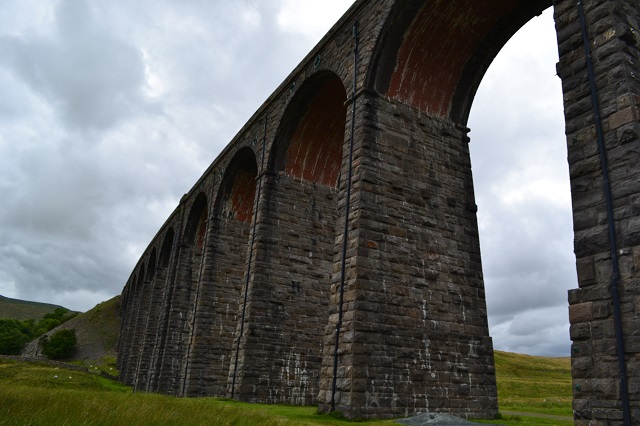
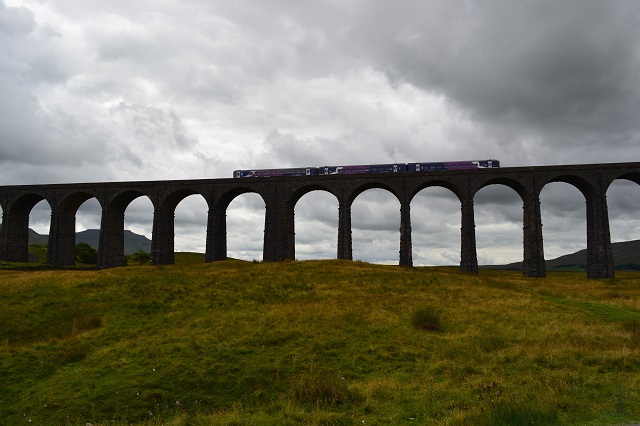
Any excuse to dig out my photos of civil engineering feats....
| Re: Settle Carlisle Railway - developments, events and incidents: ongoing discussion Posted by trainer at 22:18, 15th December 2013 | |
Who knew at the time that the young, and to many unpleasantly arrogant, politician, Michael Portillo would turn into a pleasant and well-respected television presenter of rail-based travelogues and general railway champion. Today his main detractors are probably in the fashion industry
 .
.| Re: Settle Carlisle Railway - developments, events and incidents: ongoing discussion Posted by bobm at 22:22, 15th December 2013 | |
In his Great British Railways series it was nice to see him go back to Settle and meet those who had campaigned to save the line. He rated the reprieve as his greatest political achievement.
| Re: Settle Carlisle Railway - developments, events and incidents: ongoing discussion Posted by eightf48544 at 13:11, 16th December 2013 | |
Having reprieved the line partly on its scenic value, will there be objections to wires over Ribblehead when it comes to its turn to be electrified. Which it surely must as it's carrying a lot of traffic and is a WCML and ECML diversionary route.
Re crossing Ribblehead I was lucky enough to get one the last of the Holbeck Jubilees Alberta on Saturday's only of 10:40 Leeds Carlisle (06:40 Birmingham Glasgow Relief). the fellside was packed with photgraphers.
| Re: Settle Carlisle Railway - developments, events and incidents: ongoing discussion Posted by onthecushions at 13:40, 16th December 2013 | |
Back in '89, when the ECML was being wired, the Royal Border Bridge at Berwick had to have masts (newspeak: stanchions) and the Mark3b catenary then fashionable. IIRC, a thinner gauge of support was adopted to everyone's evident contenment. I'm not aware of there having been any de-wirements there.
OTC
| Re: Settle Carlisle Railway - developments, events and incidents: ongoing discussion Posted by Alan Pettitt at 15:01, 16th December 2013 | |
In his Great British Railways series it was nice to see him go back to Settle and meet those who had campaigned to save the line. He rated the reprieve as his greatest political achievement.
For greatest? or only? !| Re: Settle Carlisle Railway - developments, events and incidents: ongoing discussion Posted by JayMac at 16:05, 16th December 2013 | |
The fixed grin on his face when he was defeated by Stephen Twigg in the 1997 General Election was quite an achievement.
| Re: Settle Carlisle Railway - developments, events and incidents: ongoing discussion Posted by TonyK at 20:35, 16th December 2013 | |
In his Great British Railways series it was nice to see him go back to Settle and meet those who had campaigned to save the line. He rated the reprieve as his greatest political achievement.
For greatest? or only? !Steady now! I have never met the man, but had dealings with a TV programme made about the civil service department where I worked. The producer told me he was not only charming, but far more easy-going than the coterie of advisers and civil servants surrounding him. I don't share his politics, and had a fairly mocking letter published in the Times after his speech at a party conference where he made a third buttock of himself ("Three letters that will strike fear into any enemy -S A S", followed by an anti-Europe rant), but politics is a dirty job, and someone has to do it. Anyone with a middle initial "X" can't be all bad.
The fixed grin on his face when he was defeated by Stephen Twigg in the 1997 General Election was quite an achievement.
Certainly was - he beat Chris Patten, and especially Mrs P, on losing Bath to Don Foster, by a country mile. And that quote "My name is now synonymous with eating a bucketload of shit in public" shows grace in defeat at a new level.
Let us be magnanimous. He saved the S&C.
| Re: Settle Carlisle Railway - developments, events and incidents: ongoing discussion Posted by Rhydgaled at 21:19, 16th December 2013 | |
Back in '89, when the ECML was being wired, the Royal Border Bridge at Berwick had to have masts (newspeak: stanchions) and the Mark3b catenary then fashionable. IIRC, a thinner gauge of support was adopted to everyone's evident contenment.
Not seen it in person, but from photographs the only thing I can fault them on is that the masts are attached to the outside of the bridge. If they can make the masts go down into the ballast, hidden behind the parapet, I wouldn't worry about similar on the Settle & Carlise.| Re: Settle Carlisle Railway - developments, events and incidents: ongoing discussion Posted by grahame at 21:48, 16th December 2013 | |
the civil service department where I worked.
Goodness me ... I worked at the CSD 1974 - 1976 ... Student programmer on industrial placement, staying on part time during my final University year. Well before your time, I suspect ... and I also did a lot of fascinating work for one of the minor candidates who stood against Michael Portillo in that election. Small world ...
| Re: Settle Carlisle Railway - developments, events and incidents: ongoing discussion Posted by Chris from Nailsea at 21:19, 17th December 2013 | |
Thanks, CfN, for the link to a very informative article.
No worries, Four Track, Now!

When I post any such items (hopefully for the information / entertainment of our readers), I really have no idea where any subsequent discussion is going to lead.
This particular topic is no exception.

| Re: Settle Carlisle Railway - developments, events and incidents: ongoing discussion Posted by Tim at 09:27, 18th December 2013 | |
Back in '89, when the ECML was being wired, the Royal Border Bridge at Berwick had to have masts (newspeak: stanchions) and the Mark3b catenary then fashionable. IIRC, a thinner gauge of support was adopted to everyone's evident contenment.
Not seen it in person, but from photographs the only thing I can fault them on is that the masts are attached to the outside of the bridge. If they can make the masts go down into the ballast, hidden behind the parapet, I wouldn't worry about similar on the Settle & Carlise.Mt assumption is that on the RBB the masts are outside of the bridge because there is no space inside the bridge.
IIUIC, there ought to be space inside the parapet on the RHV. Last time I walked over it (it was many years ago, and it was with permission - I wasn't trespassing) there was a single track were there was room for two.
| Re: Settle Carlisle Railway - developments, events and incidents: ongoing discussion Posted by stuving at 10:15, 18th December 2013 | |
Having reprieved the line partly on its scenic value, will there be objections to wires over Ribblehead when it comes to its turn to be electrified. Which it surely must as it's carrying a lot of traffic and is a WCML and ECML diversionary route.
The current electrification RUS does not even list the route for consideration. That implies it rates below the 6th tier of also-rans, such as Norwich-Sheringham. That was published in 2009, and a new version is in the works, but it seems unlikely the Settle-Carlisle's rating has gone up that much.
| Re: Settle Carlisle Railway - developments, events and incidents: ongoing discussion Posted by ellendune at 19:35, 18th December 2013 | |
IIUIC, there ought to be space inside the parapet on the RHV. Last time I walked over it (it was many years ago, and it was with permission - I wasn't trespassing) there was a single track were there was room for two.
I think it is still single tract, but if traffic continues to grow how long before it is two track again?
| Re: Settle Carlisle Railway - developments, events and incidents: ongoing discussion Posted by Chris from Nailsea at 20:01, 18th December 2013 | |
The Ribblehead Viaduct itself is indeed currently single track - see http://www.geograph.org.uk/photo/2273719
| Re: Settle Carlisle Railway - developments, events and incidents: ongoing discussion Posted by TonyK at 16:08, 19th December 2013 | |
the civil service department where I worked.
Goodness me ... I worked at the CSD 1974 - 1976 ... Student programmer on industrial placement, staying on part time during my final University year. Well before your time, I suspect ... and I also did a lot of fascinating work for one of the minor candidates who stood against Michael Portillo in that election. Small world ...
Mine was a rather than the Civil Service department, but we were contemporaries.
| Re: Settle Carlisle Railway - developments, events and incidents: ongoing discussion Posted by Tim at 16:51, 19th December 2013 | |
IIUIC, there ought to be space inside the parapet on the RHV. Last time I walked over it (it was many years ago, and it was with permission - I wasn't trespassing) there was a single track were there was room for two.
I think it is still single tract, but if traffic continues to grow how long before it is two track again?
| Re: Settle Carlisle Railway - developments, events and incidents: ongoing discussion Posted by TonyK at 17:04, 19th December 2013 | |
The Ribblehead Viaduct itself is indeed currently single track - see http://www.geograph.org.uk/photo/2273719
Singling the line in 1985 was part of the solution to keep it and the line open.
| Re: Settle Carlisle Railway - developments, events and incidents: ongoing discussion Posted by Clan Line at 21:38, 8th April 2021 | |
https://www.bbc.co.uk/news/av/uk-england-york-north-yorkshire-56680873
| Edward Album, a Founder of Friends of Settle-Carlisle Railway Trust, awarded OBE Posted by ChrisB at 19:54, 30th December 2023 | |
Friends of the Settle-Carlisle Line (FoSCL) tweeted -
We are delighted to advise that Edward Album, Legal Adviser to the Friends for almost 40 years, has been awarded an OBE as Founder of the Settle to Carlisle Railway Trust, for services to railway heritage and to rail communities in the north of England.
| Re: Settle Carlisle Railway - developments, events and incidents: ongoing discussion Posted by Chris from Nailsea at 13:20, 21st December 2025 | |
This 'new topic' is something of a seedling.
It will be expanded as I trawl through the archives of the Coffee Shop forum and move / merge here many previous posts which relate specifically to this iconic line.
In the meantime, my following post may be regarded as 'the seed being planted'.
CfN.
| Re: Settle Carlisle Railway - developments, events and incidents: ongoing discussion Posted by Chris from Nailsea at 13:29, 21st December 2025 | |
From the BBC:
Settle to Carlisle railway prepares to welcome new passengers

The Carlisle to Settle line will celebrate 150 years of carrying passengers in 2026
A picturesque and historical railway line is preparing to welcome new passengers as inter-city trains are rerouted along it during engineering work.
Welcome banners are being installed at all stations along the 116km (72m) route of the Carlisle to Settle line between Cumbria and North Yorkshire.
In January, West Coast Main Line trains will be diverted on to the former Midland Railway line as work to replace the Clifton railway bridge over the M6 takes place.
The Settle Carlisle Railway Development Company said it will be the first time for many passengers travelling the scenic line, which celebrates its 150th anniversary in 2026. Peter Myers, the organisation's chairman, said: "This is an opportunity to promote the Settle Carlisle Railway, which celebrates 150 years of passenger services and provides a gateway to the North Yorkshire Dales, Cumbria's Eden Valley and the Lake District."
The line was named among the top 10 more scenic routes in Europe by travel publishers Lonely Planet.
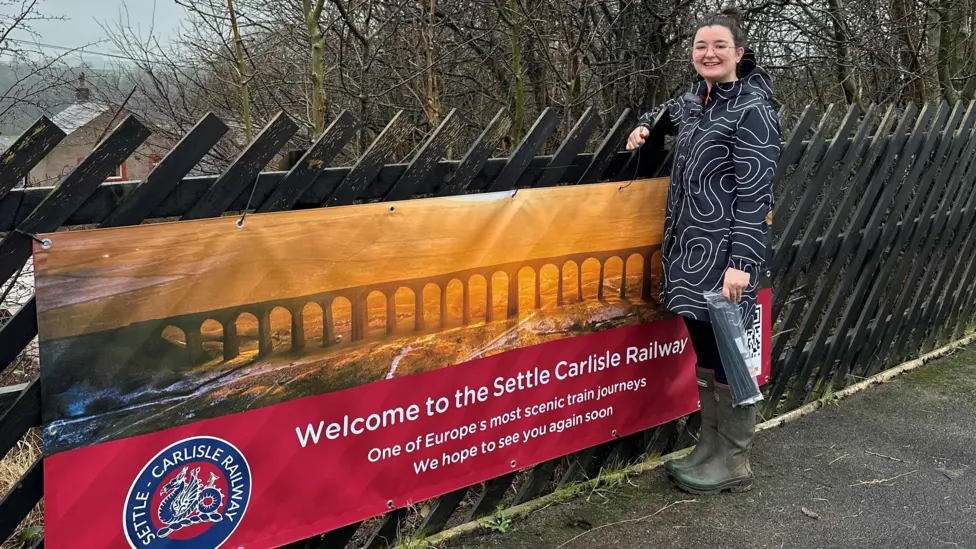
Welcome banners are being placed along the 72-mile stretch of the Settle to Carlisle line
Network Rail is carrying out work on the West Coast Main Line between Carlisle and London between 24 December and 15 January, as part of a £400m scheme over the next four years. Work includes signalling upgrades north of Carlisle and at Preston station and work on the Hanslope Junction near Milton Keynes.
The Carlisle to Settle line will celebrate 150 years of carrying passengers in 2026
A picturesque and historical railway line is preparing to welcome new passengers as inter-city trains are rerouted along it during engineering work.
Welcome banners are being installed at all stations along the 116km (72m) route of the Carlisle to Settle line between Cumbria and North Yorkshire.
In January, West Coast Main Line trains will be diverted on to the former Midland Railway line as work to replace the Clifton railway bridge over the M6 takes place.
The Settle Carlisle Railway Development Company said it will be the first time for many passengers travelling the scenic line, which celebrates its 150th anniversary in 2026. Peter Myers, the organisation's chairman, said: "This is an opportunity to promote the Settle Carlisle Railway, which celebrates 150 years of passenger services and provides a gateway to the North Yorkshire Dales, Cumbria's Eden Valley and the Lake District."
The line was named among the top 10 more scenic routes in Europe by travel publishers Lonely Planet.
Welcome banners are being placed along the 72-mile stretch of the Settle to Carlisle line
Network Rail is carrying out work on the West Coast Main Line between Carlisle and London between 24 December and 15 January, as part of a £400m scheme over the next four years. Work includes signalling upgrades north of Carlisle and at Preston station and work on the Hanslope Junction near Milton Keynes.
| Re: Settle Carlisle Railway - developments, events and incidents: ongoing discussion Posted by Chris from Nailsea at 19:26, 21st December 2025 | |
This 'new topic' is something of a seedling.
It will be expanded as I trawl through the archives of the Coffee Shop forum and move / merge here many previous posts which relate specifically to this iconic line.
In the meantime, my following post may be regarded as 'the seed being planted'.
CfN.
It will be expanded as I trawl through the archives of the Coffee Shop forum and move / merge here many previous posts which relate specifically to this iconic line.
In the meantime, my following post may be regarded as 'the seed being planted'.
CfN.
Well, I've made a start here.

We had something of a debate, among the admins and moderators, as to what the title for this topic should be: to me, that is an example of how democratic we are, here on the Coffee Shop forum.
I will continue to trawl, while wishing my (probably few) readers 'All the best for Christmas and the New Year!'
CfN.
| Re: Settle Carlisle Railway - developments, events and incidents: ongoing discussion Posted by grahame at 19:33, 21st December 2025 | |
I will continue to trawl, while wishing my (probably few) readers 'All the best for Christmas and the New Year!'
You would be amazed how many guests and lurkers we have ... a silent majority in fact.
